The Fourth Annual Healthy Cities Virtual Conference
November 12-13th, 2025
Session 5 – Nov 13th
| Session 5: Science, policy, and politics: Bridging the divide for healthier cities |
|---|
| 1:00 pm-2:00 pm EST |
About the Session
Healthy cities research aims for real-world impact, but translating evidence into practice and policy is rarely straightforward. Cities are shaped by much more than evidence alone, often heavily influenced by politics, public opinion, resource limitations, and institutional priorities. As researchers, how can we bridge the divide between science, policy, and politics? This panel tackles this question through three Canadian impact stories: addressing social infrastructure inequities in Vancouver, protecting bike lanes in Toronto, and piloting School Streets nationwide. We’ll unpack common barriers and breakthroughs, key policy levers and partnerships, strategies for persuasive communication, and the role of researchers in the process, leaving participants with inspiration and practical insights for navigating evidence-informed change.
Recording
Guest Speakers
Moderator
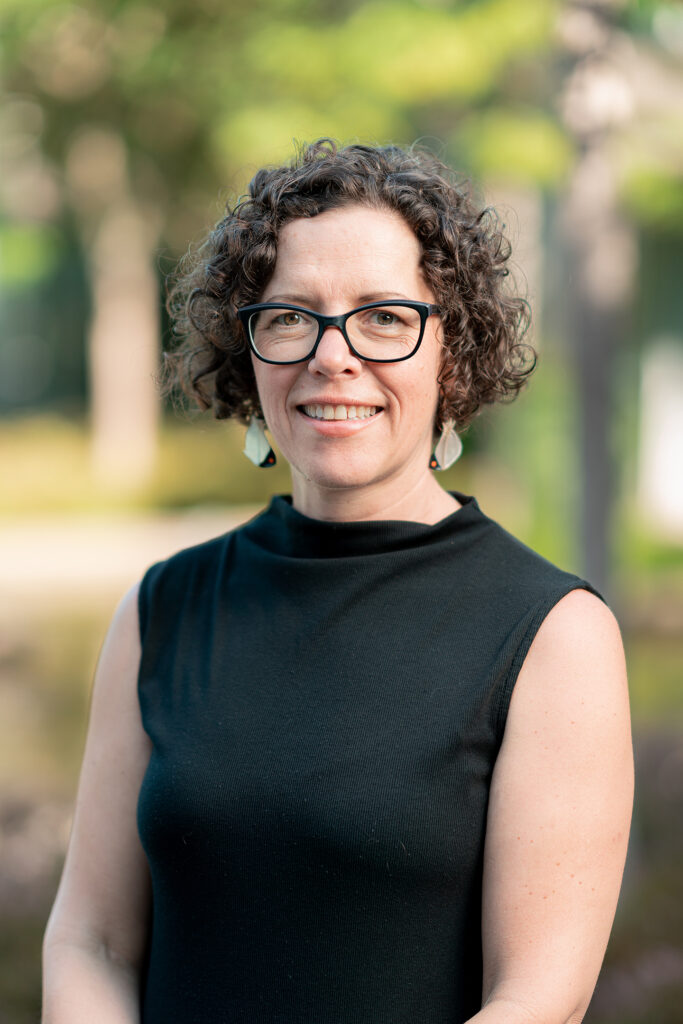
Dr. Meghan Winters
CIHR Applied Public Health Chair, Sex and Gender in Healthy Cities
Faculty of Health Sciences, Simon Fraser University
Dr. Meghan Winters is a CIHR Applied Public Health Research Chair, Sex and Gender in Healthy Cities, and a Professor in the Faculty of Health Sciences at Simon Fraser University. With her team in the Cities, Health, and Active Transportation Lab, she leads applied research to understand how city design impacts mobility, safety, and health, and also equity considerations within cities’ policy and plans. She works with decision-makers and community groups at the intersection of health, urban planning, and transportation to generate actionable evidence and tools to shape livable, sustainable, and equitable cities.
Panelists
Dr. Patricia Collins
Department of Geography and Planning, Queen’s University
Patricia Collins (she/her) is an Associate Professor in the Department of Geography and Planning at Queen’s University. She teaches primarily in the professionally accredited Master of Planning program at Queen’s. She is a healthy communities scholar, whose research focuses on the determinants of and challenges in creating healthy, sustainable, and liveable communities. She is currently one of four researchers for the National Active School Streets Initiative. She has a PhD in geography (Simon Fraser University), an MSc in health research methods (McMaster University), and a BSc in biochemistry (McMaster University).

Dr. Linda Rothman
School of Occupational and Public Health, Toronto Metropolitan University
Linda Rothman is an Associate Professor at the School of Occupational and Public Health at Toronto Metropolitan University and an Associate Professor (status only) at Dalla Lana, School of Public Health, University of Toronto. Linda is an injury prevention epidemiologist. Her areas of expertise are in vulnerable road user injuries in urban environments as a public health issue and child unintentional injury prevention. Linda’s research projects involve multidisciplinary partners including those from academia, hospitals, not-for-profit organizations, the private sector, school boards and all levels of the government. She holds several Canadian Institutes of Health Research grants related to implementation science and the evaluation of new road design modifications such as cycle tracks, reduced speed limits and automated speed enforcement.
Dr. Meridith Sones
Faculty of Health Sciences, Simon Fraser University
Meridith Sones is a researcher in the Cities, Health, and Active Transportation Research (CHATR) Lab at Simon Fraser University and Manager of Knowledge Mobilization for the Interventions, Equity, Research, and Action in Cities Team (INTERACT). An applied population health researcher, her work uses mixed and participatory methods to examine how built environments shape social connectedness, health, and equity. Meridith previously worked as a public health practitioner and consultant, leading knowledge translation and evaluation initiatives for public sector organizations in Canada and abroad.