
Written by Patricia Salazar Ramírez
Tell us about yourself
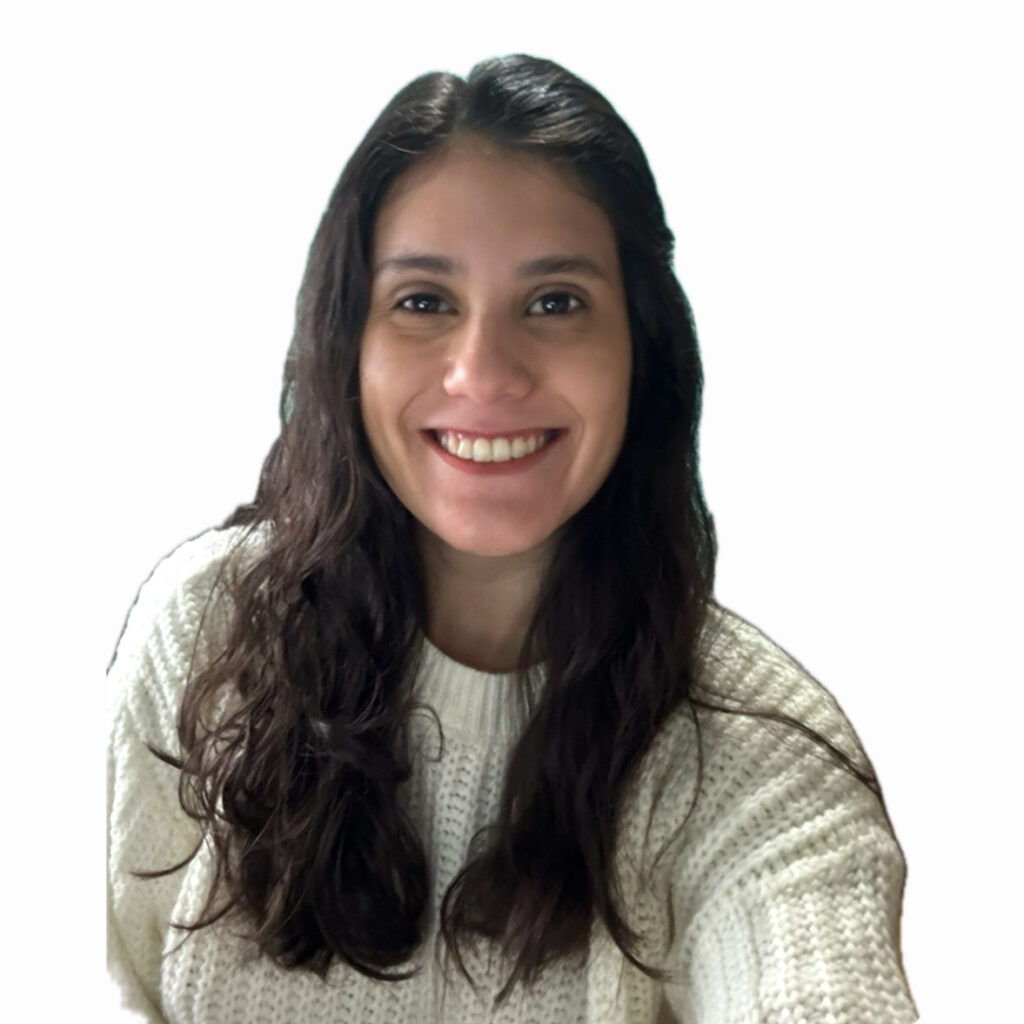
My name is Patricia Salazar Ramírez, and I am a physician from Mexico currently pursuing an MSc in Community and Population Health Sciences at the University of Saskatchewan. My research focuses on understanding how social and environmental factors influence health, particularly in urban settings with a focus on healthy cities.
During my medical training, I realized that health outcomes are not determined solely by clinical care at the individual level, but by the environments people live in. Health is shaped by how people move, the resources they have access to, and the structural conditions surrounding them. As a physician, this realization made me re-think about my own role in improving health, leading me to shift toward population health research, where I could explore these broader determinants and contribute to upstream, sustainable, population-level solutions.
After medical school, I contributed to a study analyzing suicide mortality variations in Mexico during the COVID-19 pandemic (https://onlinelibrary-wiley-com.cyber.usask.ca/doi/10.1002/mhs2.70034). This experience strengthened my interest in epidemiology and motivated me to pursue graduate studies, which ultimately led me to move to Canada to begin my MSc..
Why SMART?
I was drawn to the SMART Training Platform because of its focus on implementation science and its commitment to bridging the gap between research and real-world impact to create healthier cities. Although I did not have prior experience in implementation science, I was excited by the opportunity to develop skills in translating evidence into practice, particularly given its alignment with my research interests in healthy cities and equitable health outcomes.
Through SMART, I have had the opportunity to connect with students from diverse disciplines all over Canada, and learn about a wide range of research. It has been a very enriching learning environment that has shaped how I approach research. It has prompted me to think more critically about not only generating knowledge, but also how that knowledge can be applied in practice, shifting my perspective toward a more implementation-focused and action-oriented approach.
Your research
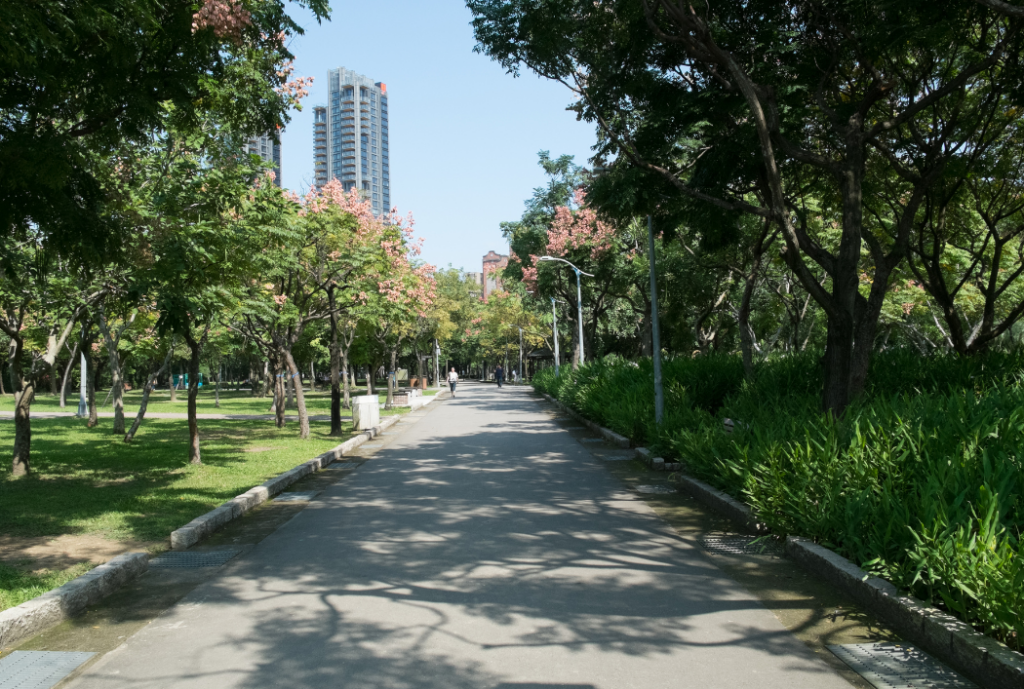
My current research focuses on the relationship between transportation, the built environment, and physical activity in urban populations using multi-level and spatial approaches. Using data from the INTerventions, Equity, Research, and Action in Cities Team (INTERACT) cohort (https://teaminteract.ca/) across four Canadian cities, I examine how active transportation contributes to overall physical activity levels.
A key component of my work is examining how urban environments, particularly walkability and transit access, shape this relationship. I am interested in whether specific urban design characteristics support or discourage healthy behaviours across different populations, and ultimately, how these patterns may contribute to health inequities.
During my SMART Traineeship, I also contributed to a report for the City of Saskatoon titled “Pedestrian Level-of-Service (PLOS) and Walkability Equity in Saskatoon: A Gender-Based and Health Analysis” (https://github.com/patysalazar/plos_project). In this project, I helped develop a Pedestrian Level-of-Service (PLOS) measure and examined its relationship with walking to work, gender composition, and diabetes prevalence at the dissemination-area (DA) level.
My future
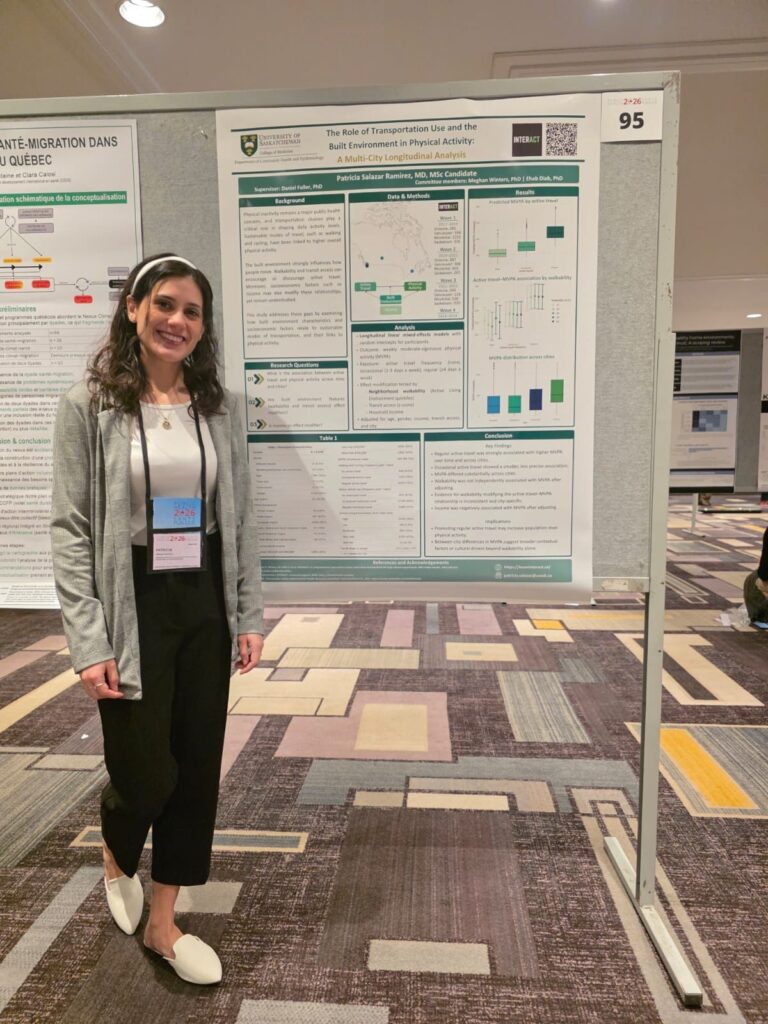
My hope is that my research contributes to the development of healthier, more equitable urban environments by informing policies and interventions that promote active transportation and reduce barriers to physical activity.
In the long term, I aim for this work to support decision-makers, such as urban planners and policymakers, in designing cities that enable healthier lifestyles for all populations, particularly those who have been historically underserved. By identifying how environmental and social factors interact, my goal is to help ensure that health-promoting infrastructure benefits everyone, not just specific groups.
Through my involvement in initiatives such as INTERACT and CapaCITY/É (https://capacity-capacite.ca/), I have become particularly interested in how this type of evidence can be actively translated into practice and scaled across different contexts, ensuring that research findings are implemented across cities.
